
Cat Scratch Posts and Cat Trees: Design for Feline Health and Safety
Scratching is an essential and enriching activity for cats, serving both biomechanical and neurological purposes. It not only supports the health of their claws but also engages their shoulders, spine, and core muscles through full extension. This is crucial for indoor cats who may lack natural climbing opportunities, as it promotes joint health, flexibility, and muscle tone.
Moreover, scratching significantly contributes to a cat’s emotional well-being. Studies consistently show that providing appropriate scratching surfaces can alleviate stress-related behaviors, such as inappropriate elimination and destructive habits. Scratching beautifully combines physical activity, scent marking, and environmental control, three key elements that foster a cat’s sense of security and happiness. Let’s ensure our feline friends have everything they need to thrive!
Materials Matter: Why Natural Surfaces Are Superior
Cats show strong material preferences, and these are not arbitrary.
Best-performing scratch materials:
- Natural sisal (rope or woven fabric): Offers the correct resistance and fiber texture to catch and shed claw sheaths efficiently. Sisal outperforms synthetic fibers in durability and user preference.
- Solid wood cores provide structural rigidity and resistance to vibration during forceful scratching.
- Corrugated cardboard: Effective for horizontal scratchers, though short-lived and best used as a supplement rather than a primary post.
Avoid synthetic carpeting or chemically treated woods. These materials wear unevenly, can shed microfibers, and often fail under the torque generated by large or athletic cats.
Scratching Devices: Fit the Cat, Not the House
Cats don’t all scratch the same way. Some prefer vertical posts, others like horizontal or angled scratchers. The goal is to match the device to how your cat already likes to scratch.
Size matters. A scratching post should be tall and sturdy enough for your cat to stretch its full length from paws to toes. If a cat has to crouch or the post wobbles, it won’t get used, especially by larger cats.
Scratching is also a form of territorial marking. Cats leave both visible marks and scent from glands in their paws. Placing scratchers near sleeping areas, room entrances, and along common walkways helps cats feel secure and reduces unwanted scratching elsewhere.
If a cat ignores a scratcher, it’s usually not stubbornness; it’s feedback. Try a different orientation or size and let your cat tell you what works.
Stability Is a Safety Issue—Especially for Large Cats
A scratch post or cat tree that moves, tips, or flexes when a cat uses it is not only ineffective but also unsafe. Cats tend to abandon unstable structures after just one failure, and falls from heights are a common cause of injury in indoor settings.
Key stability indicators:
- Heavy, wide bases or floor-to-ceiling tension systems
- Thick, solid posts (not hollow cardboard tubes)
- Weight ratings appropriate for large or multiple cats
For large breeds (such as Maine Coons, Norwegian Forest Cats, or mixed-breed cats weighing 6–7 kg or more), engineering matters more than aesthetics.
Cat Tree King scratching posts stand out as an exceptional choice for larger cats, like Maine Coons, thanks to their thoughtful design and sturdy construction. Made from solid wood with oversized posts and a robust base, these trees provide remarkable stability, ensuring your feline friends can scratch and climb without worry. When you have big or playful cats, this safety feature becomes a vital necessity, not just an added bonus. Investing in one of these cat trees is like bringing home a beautiful piece of furniture. Catacats has one and wholeheartedly recommends them for all BIG KITTIES.
Vertical Space and Load-Bearing Design
Cat trees function as vertical territory, but only when they are load-bearing and confidence-inspiring. Elevated perches must remain stable during jumping, turning, and rapid descent. Multi-level designs should distribute weight downward rather than relying on narrow central columns.
Well-designed cat trees:
- Encourage natural climbing and jumping patterns.
- Reduce stress by providing observation points.
- Expand territory in multi-cat households without increasing conflict.
Inadequate structures can have the opposite effect, increasing anxiety and avoidance behaviors.
Placement Based on Behavioral Science
Cats scratch where scratching is biologically relevant.
Optimal placement includes:
- Near resting areas (post-sleep stretching is a predictable behavior)
- Along natural movement pathways
- Adjacent to existing problem-scratch locations
For cat trees, placement near windows or socially significant rooms increases use and long-term engagement.
Ongoing Safety and Maintenance
Even high-quality structures require routine checks:
- Inspect for loosening bolts or degraded sisal.
- Replace worn, scratching surfaces before they fail.
- Ensure wall anchors or tension systems remain secure.
Cats trust their environment. When structures fail, that trust is lost, and usage drops permanently.
The Takeaway
Scratch posts and cat trees are essential environmental structures, not merely enrichment add-ons. When constructed from natural materials, designed for stability, and positioned according to feline behavior rather than human convenience, they promote physical health, emotional well-being, and long-term safety.
For large cats in particular, investing in a high-quality, structurally sound system, such as Cat Tree King’s scratching posts, can prevent injuries, reduce stress, and dramatically improve quality of life.
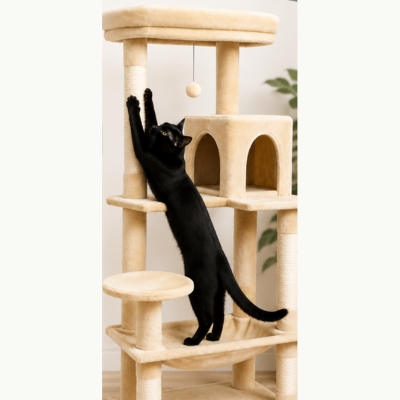
Multi-Level
Cat Tree Tower
Sisal covered scratching posts. Offers stability for
small to average-sized cats.
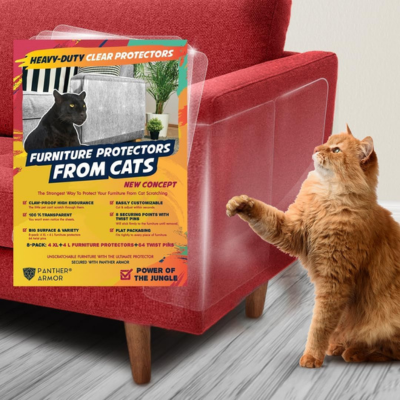
Cat Scratch Couch Protector-Transparent
Peel-and-stick design. Customisable coverage.
Designed to protect fabric surfaces.
Receive thoughtful updates, helpful tips, and sneak peeks at the upcoming Catacats guidebook.
Disclosure & Disclaimer: As an Amazon Associate, I may earn commission from qualifying purchases at no extra cost to you. All recommendations are based on research and experience to help you provide the best care for your cats. The information provided is for educational purposes only and is not a substitute for professional veterinary advice. Always consult your veterinarian regarding your cat’s health, diet, and care.