
New Kitten Care: What to Do First
A calm, thoughtful start for a confident, healthy kitten
Bringing home a kitten is thrilling. It’s also easy to walk into the pet store thinking toys and treats are the priority. What kittens actually need first is routine, structure, and a sense of safety. Everything else can wait.
Catacats believes in supporting the whole kitten, not just isolated pieces like food or toys. Kittens aren’t blank slates. They arrive wired with instincts that direct how they eat, sleep, explore, and react to the world. The more you understand those instincts, the smoother the first few weeks go.

Your Kitten’s Instincts Are Doing the Talking
Even tiny kittens behave like the predators they are, with short bursts of activity, long stretches of sleep, and constant scanning for safety. A kitten who hides under the couch for most of the day isn’t being shy. She’s doing exactly what a small animal in an unfamiliar place is built to do.
You can expect 16 to 20 hours of sleep a day, which is normal given how much growing their bodies are doing in the background. Meals should be small and frequent rather than large. Exploration will be cautious, especially around new rooms or unfamiliar sounds, and a loud noise or sudden movement can trigger a real startle response even in a confident kitten.
None of this is something to correct. It’s a nervous system doing its job. You’re shaping the personality your kitten will carry for life, into a cat who’ll be part of your family for years to come, so it’s worth doing that shaping with intention. Kittens who feel safe adapt faster and get bolder on their own timeline, and there’s not much you can do to speed that up beyond staying steady and predictable yourself.
The First 24 to 48 Hours
Resist the urge to give a new kitten the run of the house on day one. A single quiet room works better: litter box, food and water in separate spots, a soft resting area, and somewhere to hide, like a covered bed or a box turned on its side.

Let your kitten set the pace from there. Some will be out exploring within the hour. Others watch from under the bed for a day, sometimes two, and that’s fine too. What doesn’t help is the parade of visitors, the passing around, the well-meaning attempts to coax them out with petting. Kittens build confidence by feeling in control of their space, not by being reassured into leaving it.
Feeding: Structure Over Guesswork Basics
Kittens grow fast, and their bodies need fuel to keep up. Most transition to kitten-specific food by 3 to 5 weeks. The resting energy formulas vets use in practice put a kitten’s caloric needs at roughly two to two and a half times an adult cat’s, per pound of body weight, peaking before four months and tapering as growth slows. That number matters less as something to memorize than as a reason not to portion food the way you would for an adult cat.
In practice, that means several small meals a day rather than one or two large ones, offered at the same times in the same quiet spot. Wet food shouldn’t sit out for long stretches; dry food schedules can be a bit more flexible with your vet’s input. Keep fresh water available too, ideally somewhere clean and quiet, away from both the litter box and the food bowl. Many cats prefer their water kept separate.
There’s a practical upside to sticking to a schedule beyond portion control: a kitten eating on a routine will tell you right away if something’s off. One that grazes all day makes those early appetite changes much easier to miss.
Book the First Vet Visit Early
This is the step most kitten guides bury or skip, and it shouldn’t be. Vet visits catch problems early, and life gets busy enough that it’s easy to put off. Get a vet visit on the calendar for the first week home.

What happens at a kitten’s first vet visit:
- A full physical exam, checking for congenital issues like heart murmurs, hernias, or cleft palate
- Parasite screening for fleas and intestinal worms, plus a deworming schedule
- FeLV/FIV testing (feline leukemia and feline immunodeficiency virus), especially important if you have other cats at home
- The first FVRCP vaccine, the core kitten vaccine that protects against three common and serious feline viruses. Per current AAHA and AAFP feline vaccination guidelines, the first dose is given at 6 to 8 weeks, with boosters roughly every 3 to 4 weeks until at least 16 weeks. That spacing matters because maternal antibodies fade at different rates and can block an earlier dose from working
- A conversation about spay or neuter timing. Most veterinary organizations, including the AVMA, now recommend sterilization before 5 months of age, ahead of a cat’s first heat cycle
Cats are famously good at hiding pain and illness. This visit, and the ones that follow it, matter more than they might seem to for a kitten who looks perfectly fine.
Supplies Worth Buying (and Skipping)
You don’t need a full aisle. A properly sized stainless steel litter box with unscented litter, food (preferably wet) and water bowls (non-plastic tends to be gentler on chins and less likely to harbor bacteria), a soft resting area, a scratching surface, and a few safe toys will cover the basics.
Skip the impulse buys for now. Preferences around bowl shape, bed style, and favorite hiding spots tend to reveal themselves over the first few weeks, not on day one.
Set Up the Space, Then Expand Slowly
Before your kitten gets more room to roam, kitten-proof it. Tuck away cords, secure medications, and move anything fragile or chewable out of reach.
From there, expand access gradually. A few placement choices make a real difference over time: keep feeding areas away from the litter box, put resting spots out of high-traffic paths, and make sure any climbing surfaces feel sturdy rather than wobbly. These small decisions add up and quietly prevent many behavior problems down the road.
What Not to Do
Hands make poor toys. Using them that way teaches a kitten that biting skin is fair game, so redirect to an actual toy instead.
Forced interaction tends to backfire too. Let your kitten come to you on her own terms, and skip punishment altogether. If she’s scratching the couch or nipping too hard, redirecting to a scratcher or a toy works. Punishment mostly teaches her to be afraid of you. And once the litter box, food, and bed are in a spot, try to leave them there. Moving things around undercuts the consistency that helps a kitten trust the space in the first place.
Watch For These Signs
Kittens hide illness well, so small changes are worth paying attention to: a sudden change in appetite, low energy, hiding that goes on well past the normal settling-in period, changes in litter box habits, or vomiting and diarrhea.
None of these automatically means something is wrong. But if any of them stick around, it’s worth calling your vet.
The Bottom Line
You are literally crafting your cat. A trusting, calm being, or a nervous one carrying any number of behavioral problems. They come to you with a lot already wired in, and you shape the rest through understanding their instincts and nature: what helps and what hinders. Cats thrive on calm routine. They come undone from chaos, distrust, and nervousness.
Get the first vet visit on the calendar. Keep feeding and space predictable. Let your kitten’s confidence build at its own pace. The rest tends to follow.
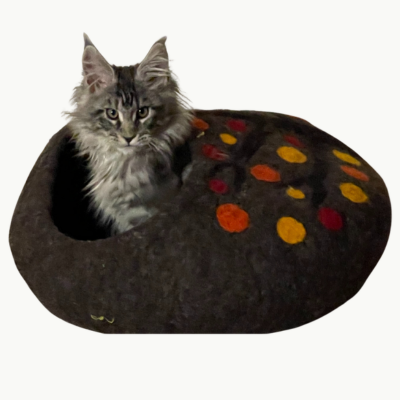
Cozy Kitten Cave
Handmade Merino Wool
Durable, yet super soft, lightweight, and portable. Perfect gift for new kitten parents. 16″D x 16″W x 10″H

Churu for Kittens, Lickable, Squeezable Creamy Purée
A favorite TREAT! Have them eating out of your hand: Strengthen the bond between cat & human parents
Learn More
Kitten Growth Chart: Weight, Age & Development Guide: Learn how food moisture, complete and balanced diets, calorie needs, and feeding choices work together to support your cat’s health.
Nutrition: Learn more about how biologically appropriate nutrition supports health, vitality, and longevity in cats.
Keep a clear record of your cat’s growth over time with.
Disclosure & Disclaimer: As an Amazon Associate, I may earn commission from qualifying purchases at no extra cost to you. All recommendations are based on research and experience to help you provide the best care for your cats. The information provided is for educational purposes only and is not a substitute for professional veterinary advice. Always consult your veterinarian regarding your cat’s health, diet, and care.