
Cat Collars, Harnesses & Leashes: Fit, Safety, and What the Research Actually Says
A collar or harness may look like a simple piece of gear, but the details matter more than they seem. Fit, material, and design choices affect whether that gear keeps a cat safe or becomes the source of an emergency.
Cats aren’t small dogs. Gear designed for dogs doesn’t automatically translate well to a cat’s smaller frame, anatomy, movement, or very different response to restraint.
Proper Fit Matters More Than It Seems
Cats vary considerably in size and body shape, so there is no universal fit.
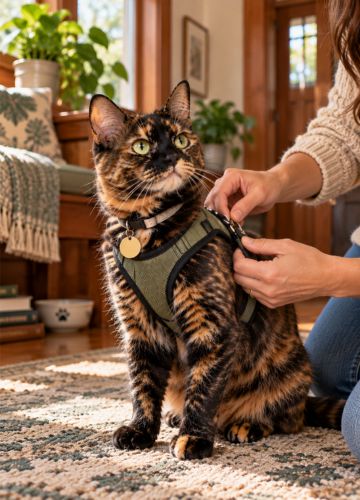
For a collar, measure around the highest point of the neck, just behind the ears, using a soft measuring tape. Once the collar is on, you should be able to comfortably slide one finger between the collar and your cat’s neck.
A collar that is too loose can slide over the head or allow a leg or jaw to become trapped. A collar that is too tight can cause irritation, restrict movement, or contribute to choking.
Adjustable collars are worth the extra step. Check the fit periodically, especially for growing kittens or cats whose weight has changed.
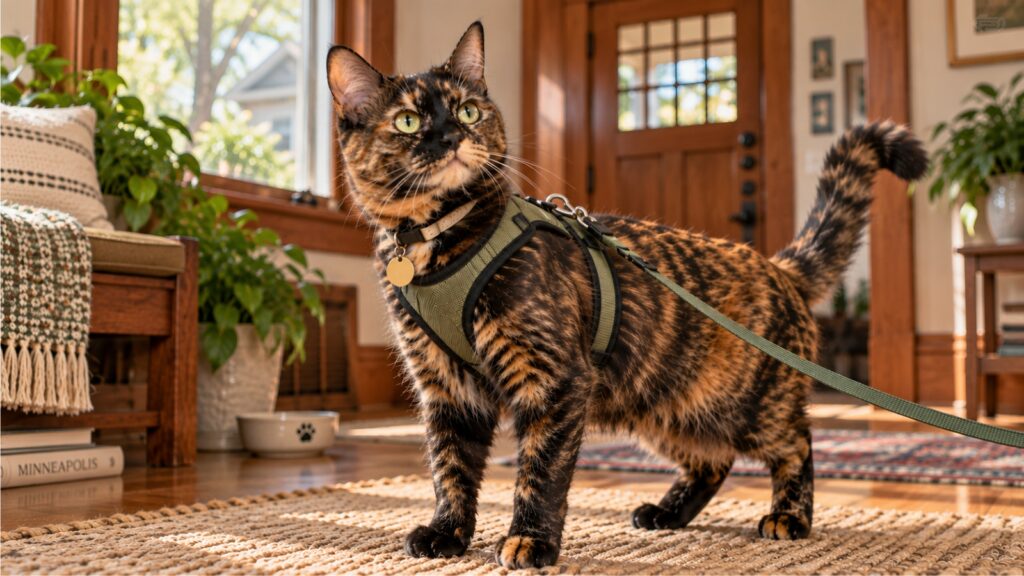
For a harness, measure around the broadest part of the chest. A properly fitted harness should allow full movement and comfortable breathing while preventing the cat from backing out. The commonly recommended guideline is about two fingers of space between the harness and the body.
Large cats, including Maine Coons, may need harnesses specifically designed for their proportions rather than simply choosing a larger version of a standard cat harness.
Fit is not cosmetic. It is a safety issue.
Why Breakaway Collars Are Worth It: What the Research Shows
A breakaway, or quick-release, collar is designed to open when sufficient tension is applied. The purpose is straightforward: if a cat’s collar gets caught on a branch, fence, furniture, or another object, it can release instead of trapping the cat.
A widely cited 2013 study by Calver et al. examined real-world collar incidents reported by veterinarians and cat owners. Among collar injuries where the collar type was known, flea collars accounted for 42%, elasticized collars 39%, and standard/non-breakaway collars 18%. The researchers also found that collar-related injuries and deaths were uncommon overall.
A more recent 2022 survey involving more than 5,000 participants found that collar-related problems occurred but were considerably less common than several other risks associated with free-roaming cats. A separate 2022 literature review concluded that breakaway or safety collars help reduce the consequences of entrapment, but they do not eliminate the risk of injury.
The practical takeaway is clear:
If your cat wears a collar, a properly fitted breakaway collar is generally the preferred choice, particularly when snagging is possible.
It does not guarantee safety. The collar still needs to fit correctly, remain in good condition, and be checked regularly.
Identification: Tag and Microchip Together
Even indoor cats can escape. A door is left open. A screen gives way. A cat bolts during a move or slips through an unexpected opening.
That is why visible identification and permanent identification work best together.
A visible ID tag attached to a breakaway collar can provide immediate information to whoever finds your cat. A microchip provides permanent identification even if the collar is lost.
Research supports the value of using both. In a 2010 study of 538 cats, 72.7% wore collars for six months, while 99.8% of the microchips checked were functioning.
Your cat’s ID tag should include a current phone number and, when appropriate, critical medical information.
Keep the tag lightweight, and make sure it doesn’t interfere with the breakaway mechanism. Reflective or glow elements can also improve night visibility.
A collar can be lost. A microchip provides permanent identification. A microchip also cannot be seen from across a yard. Use both.
The Real Danger: Flea and Tick Chemicals
This is where the stakes become much higher.
Never use a flea or tick product labeled for dogs on a cat.
Permethrin is particularly dangerous. Cats are extraordinarily sensitive to this insecticide, and their limited ability to metabolize certain compounds may contribute to their vulnerability. Even relatively small exposures can cause severe neurological toxicity, including tremors, drooling, lack of coordination, seizures, and potentially death. Cats can also be exposed indirectly by grooming or coming into close contact with a recently treated dog.
If a cat is accidentally exposed to a dog flea or tick product containing permethrin, contact a veterinarian or emergency veterinary hospital immediately. Do not wait for symptoms to develop.
Cat-formulated flea and tick products are not automatically risk-free, either. Some collars and topical products can cause skin irritation, dermatitis, or hair loss, particularly with prolonged contact. Check your cat’s neck and surrounding skin regularly for redness, swelling, irritation, or hair loss. Inspect and clean the collar as needed.
Avoid layering multiple pesticide-containing products unless your veterinarian has specifically recommended the combination.
The label matters. “Flea collar” is not enough. The product must be formulated and labeled specifically for cats.
Physical Risks Worth Watching For
Even properly designed gear can cause problems if it is poorly fitted, damaged, or used without supervision.
A collar can twist, become caught in the mouth, or trap a leg. A harness can let a leg slip through an opening or twist during vigorous movement. Pulling against a leash can also create pressure on the neck, chest, or limbs.
Watch your cat carefully the first several times you use a collar or harness. Don’t assume that because the initial fit looks correct, the equipment will stay in place during movement.
Check periodically for:
- Chafing or abrasions
- Redness or hair loss
- Twisted straps
- Damaged buckles or stitching
- A collar that has become too loose
- A harness that restricts normal movement
- Signs that your cat is repeatedly trying to escape the equipment
If the gear is damaged, replace it. This is not the place to get one more season out of an old strap.
Leashes: Use the Harness, Not the Collar
A leash gives you control during outdoor exploration, but where you attach it matters.
Attach the leash to the harness, not the collar. A sudden pull from a leash attached to a collar can put unnecessary pressure on the neck. A properly fitted harness distributes that force more broadly across the body.
Never use the leash to drag, force, or restrain a cat that is actively panicking. A frightened cat may twist, back out of the harness, or struggle violently enough to injure itself.
Before going outdoors, let your cat become comfortable wearing the harness indoors. Introduce the leash gradually and practice in a controlled environment before attempting an outdoor walk.
The goal isn’t to make a cat behave like a dog. It’s to give the cat a safer way to explore.
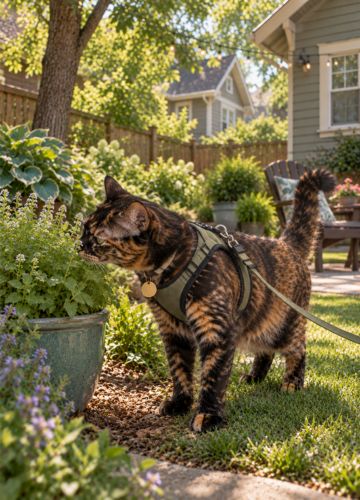
on the neck.
Harnesses and Heat: What Actually Matters
Heat deserves attention, but it’s important to distinguish between heat exposure and the harness itself.
The 2022 ISFM/AAFP Cat Friendly Veterinary Environment Guidelines cite a feline thermoneutral zone of about 86–100.4°F (30–38°C), although thermoregulation varies by individual and environment.
No hard, research-backed temperature exists at which wearing a harness suddenly becomes dangerous. Heat risk depends on the entire environment, including humidity, direct sun exposure, coat characteristics, ventilation, and physical exertion.
A heavy, poorly ventilated, or highly covering harness may add insulation around the body, which is another reason to avoid unnecessary heat and exertion.
Panting at rest or persistent panting is concerning in a cat and warrants attention. Other warning signs can include excessive drooling, weakness, lethargy, rapid breathing, or a markedly elevated heart rate.
If your cat shows signs of overheating, stop the activity, remove the harness, move the cat into a cool shaded environment, and offer water. If concerning signs persist or your cat appears seriously affected, contact a veterinarian promptly.
For warm-weather outings, choose cooler times of day, use lightweight breathable equipment, avoid prolonged direct sun, and provide frequent opportunities to rest in the shade.
The goal is not to find a magic temperature. It is to recognize when the whole environment has become too much for the cat.
The Bottom Line
Good collar, harness, and leash choices come down to a short list of things that are actually supported by evidence and sound safety practice:
- A properly fitted breakaway collar if your cat wears a collar
- A visible ID tag paired with permanent identification through a microchip
- A properly fitted cat harness, rather than adapting poorly fitting dog equipment
- A leash attached to the harness, not the collar
- Strict attention to flea and tick product labels, especially avoiding products formulated for dogs
- Regular inspection of collars and harnesses for damage, irritation, and fit
- Close attention to heat, humidity, sun exposure, coat, and exertion during outdoor activity
The biggest mistake is treating cat gear as harmless simply because it looks simple.
The right equipment can be a safety tool. The wrong equipment can become an emergency.
Sources
- Calver, M.C. et al. (2013), survey of veterinarians on cat collar-related injury by collar type
- Lord, L.K. et al. (2010), “Evaluation of collars and microchips for visual and permanent identification of pet cats,” Journal of the American Veterinary Medical Association
- Arhant, C., Heizmann, V., Schauberger, G., Windschnurer, I. (2022), “Risks and benefits of collar use in cats (Felis catus): a literature review,” Journal of Veterinary Behavior
- Arhant, C., Lesch, R., Heizmann, V., Schauberger, G., Windschnurer, I. (2022), “Risks associated with free-roaming and collar use in cats: an online survey,” Journal of Veterinary Behavior
- Richardson, J.A. (2000), “Permethrin Spot-On Toxicoses in Cats,” Journal of Veterinary Emergency and Critical Care, 10(2), 103–106
- Malik, R. et al. (2010), “Permethrin spot-on intoxication of cats: Literature review and survey of veterinary practitioners in Australia,” Journal of Feline Medicine and Surgery
- Taylor, S. et al. (2022), “2022 ISFM/AAFP Cat Friendly Veterinary Environment Guidelines,” Journal of Feline Medicine and Surgery
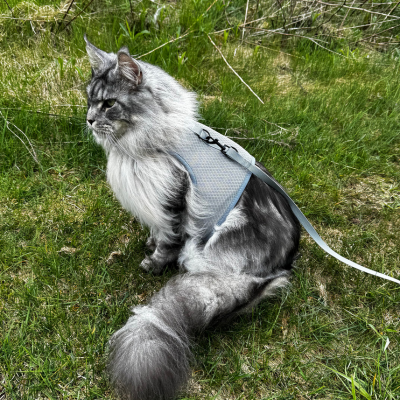
Easy Escape-Proof Cat
Harness & Leash
Lightweight mesh | Secure hook & loop closure
Adjustable fit | Includes leash + basic training guidance
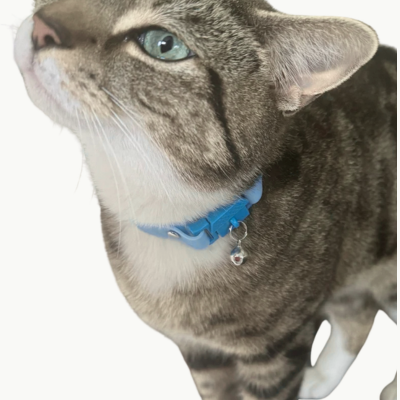
Cat Collar with Bell Breakaway Quick Release
Hypoallergenic cat-friendly breakaway collar.
Adult cat collar size 7.7″- 10.4″. Kitten 5.7″-7.3″.
Learn More
Cat Basics: Many everyday cat behaviors come from natural instincts shaped over thousands of years.
Emergencies: Knowing the warning signs of a true cat emergency can help you act quickly when minutes matter.
Receive thoughtful updates, helpful tips, and sneak peeks at the upcoming Catacats guidebook.
Disclosure & Disclaimer: As an Amazon Associate, I may earn commission from qualifying purchases at no extra cost to you. All recommendations are based on research and experience to help you provide the best care for your cats. The information provided is for educational purposes only and is not a substitute for professional veterinary advice. Always consult your veterinarian regarding your cat’s health, diet, and care.