
Bathing Your Cat: A Calm, Vet-Informed Guide
Most cats never need a bath, and when one does, the goal is a clean, safe cat who still trusts you afterward. A cat bath is not a quick chore. It’s a small event with a lot of moving parts: water noise, water temperature, products, footing, body heat, stress, and two sets of claws if things go sideways.
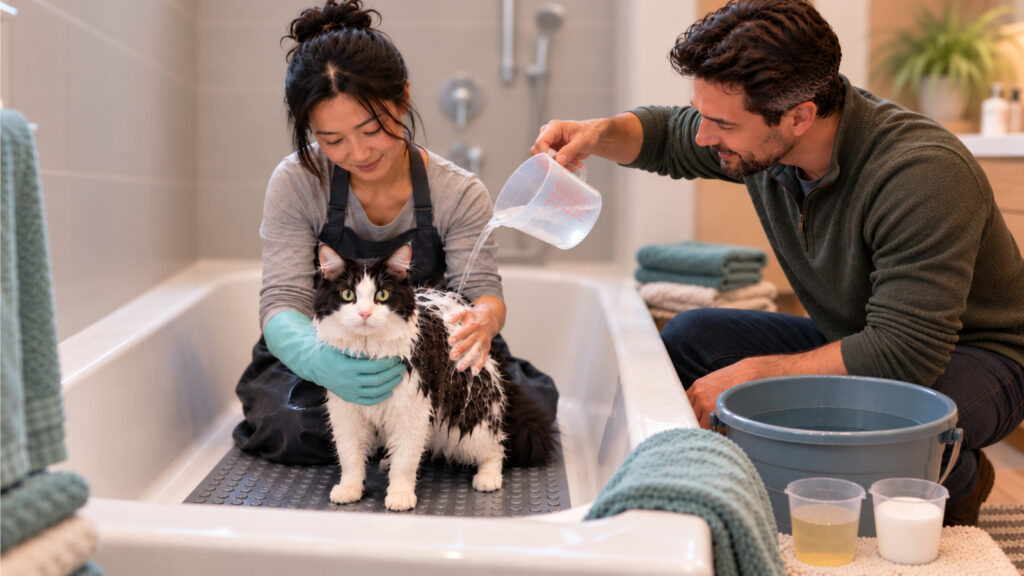
while the other carefully controls the water flow during bathing.
We’ve built this guide around one idea: think it all through before the cat ever touches water. Below, you’ll find when a bath is truly necessary, why cats react the way they do, a room-by-room bathroom safety check, cat-safe products to consider, our calm two-person protocol, and a plan for when things don’t go to plan.
This guide draws on veterinary guidance and practical cat-handling principles. It isn’t a substitute for your veterinarian. If your cat is a senior, a kitten, pregnant, ill, or has heart, breathing, or skin conditions, talk to your vet before you bathe.
Step zero: does your cat actually need a bath?
Usually, no. Veterinarians at Cornell’s Feline Health Center and Texas A&M’s veterinary college agree that the average healthy cat keeps itself clean. Texas A&M dermatologist Dr. Alison Diesel adds that a first bath for an adult cat can be traumatic and can strain the bond between cat and owner. That’s why we treat a bath as a tool, not a routine.
| Situation | Bath? | Our take |
|---|---|---|
| Something toxic or sticky on the coat (oil, antifreeze, cleaning product, essential oils) | Yes, promptly | Cats lick off whatever is on their fur. Call your vet or a pet poison line first; they may want to see the cat. |
| Urine or stool stuck to the coat (incontinence, diarrhea, a long-haired “bottom”) | Often a spot-wash is enough | Clean only the area that needs it. |
| Hairless breeds (Sphynx) | Yes, routinely | About once every 1–2 weeks at most; start in kittenhood. |
| Senior, arthritic, or overweight cats who can’t groom | Sometimes | First ask your vet why grooming stopped. It can signal pain or illness. |
| Prescribed medicated shampoo (ringworm, skin infection, allergies) | Yes, as directed | Follow your vet’s product, schedule, and contact time exactly. |
| Fleas | Not usually | Modern vet-prescribed flea treatments work without a bath. Ask before bathing, since some topicals need dry skin. |
| Just a bit dusty or “smells like cat” | No | Brush, comb, or use a pet-safe wipe. |
| Before a car trip, boarding, or show | Avoid | Stacking stresses is hard on cats. |
When to hand it off instead: a professional cat groomer or your vet clinic is the better choice if your cat has heavy matting, has ever bitten during handling, has a heart or breathing condition, or is very young, very old, or ill. There’s no prize for doing it yourself.
Why baths are so hard on cats
Cats aren’t being dramatic. Their bodies and instincts make a bath feel genuinely threatening, and every precaution in this guide addresses one of these facts.
- Desert heritage. Domestic cats descend from wildcats of arid regions. Being soaked was never part of their world, and a wet coat insulates poorly.
- They already groom. A cat’s barbed tongue and constant grooming keep the coat clean. Grooming also spreads the cat’s own scent, so a bath can leave them smelling “wrong” to themselves for a while.
- Extraordinary hearing. Lab studies put a cat’s hearing range at about 48 Hz to 85 kHz, one of the broadest among mammals. Humans top out near 20 kHz. A running faucet, sprayer, or blow dryer is far louder and harsher to a cat than to you.
- Body heat. A cat’s normal temperature is roughly 100.5–102.5°F (38–39.2°C). Small bodies lose heat quickly once wet, and shivering is an early sign of dropping body temperature. Kittens and seniors are most at risk.
- Restraint triggers fear. Being held still with no escape route triggers the fight-or-flight response. Adrenaline can make a warm cat tremble.
- Ears and face are sensitive. Water in the ear canals can cause irritation or infection, and water near the nose and mouth can be inhaled if a frightened cat gasps.
The bathroom safety audit
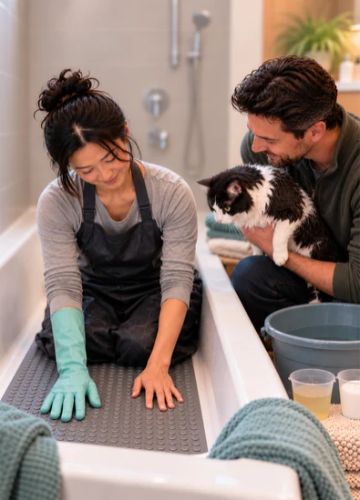
Walk through your bathroom the day before and look at it like a frightened, wet, slippery cat. Fix anything they could knock over, swallow, hide behind, or slip on before bath day.
Surfaces and breakables
- Remove every glass item from counters, shelves, and the tub edge: cups, jars, perfume, and candles.
- Clear the tub ledge and counter of razors, scissors, hair tools, and anything with a cord.
- Put medications, cosmetics, and cleaning products away behind a closed door.
Footing
- Lay a rubber, slip-proof mat in the tub. A cat that can grip feels far less panicked.
- Place a towel or bath rug beside the tub for the person kneeling, for escape, or for spills.
Residue and fumes
- Rinse the tub thoroughly with plain water to remove cleaner residue. Bleach and many cleaners irritate paws and skin.
- Unplug air fresheners and essential oil diffusers. Many essential oils are toxic to cats.
Hiding spots and exits
- Close the toilet lid.
- Block gaps behind the toilet, under the sink, and behind the door.
- Close the bathroom door during the bath. Know where your cat will run if they bolt, and close off rooms you don’t want a wet cat in.
Heat and electricity
- Warm the room in advance and close any vents that blow cold air. A comfortably warm room means less shivering.
- If you use a space heater to pre-warm, choose one with tip-over and overheat shut-off. Turn it off and move it out before any water is in the room. Electrical appliances and splashing water don’t mix, for you or your cat.
Water supply
- Turn off the faucet once your bucket is filled. Someone bumping the tap could spray scalding or cold water onto your cat.
- Make sure the drain works so you’re never rinsing a cat in standing, soapy water.
Products: what to use, and what never touches your cat
Use only products labeled for cats. Whatever goes on the coat will go into the cat, because they will lick it off.
What we use. We like Earthbath because its cat formulas are pH-balanced and soap-free. The 2-in-1 combines cat-safe shampoo and conditioner, so you get one less lather-and-rinse cycle and a shorter bath. For sensitive skin or multi-cat homes, the fragrance-free hypoallergenic cat shampoo skips added scent, which matters to a nose as sensitive as a cat’s. The label allows you to dilute it up to 10 parts water to 1 part shampoo, making it easier to spread and rinse off.
Never use these on a cat:
- Dog flea and tick products. Some dog products contain concentrated permethrin or other pyrethroids that can be highly toxic to cats. Never use a flea or tick product on a cat unless the label specifically says it is for cats. Signs of permethrin poisoning can include wobbliness, muscle tremors, and seizures.
- Products with essential oils, including tea tree, peppermint, citrus, and eucalyptus. Cats are especially sensitive to them.
- Human shampoo, baby shampoo, or dish soap for routine bathing. These products aren’t formulated for a cat’s skin and can irritate it. If your cat has been exposed to a potentially toxic topical product, contact your veterinarian or a pet poison service immediately and follow their specific decontamination instructions.
- Medicated shampoos not prescribed for your cat.
Gear checklist
| Item | Why |
|---|---|
| Large bucket of warm water | Quiet water source; no running faucet |
| 4-cup plastic measuring cup | Gentle, controlled pour-over |
| Small plastic cups for pre-diluted product | Warm, ready, and quick to apply |
| Rubber slip-proof tub mat | Secure footing reduces panic |
| Elbow-length rubber gloves | Protects the Holder’s arms |
| Damp washcloth | Cleans the face without water near eyes, nose, or ears |
| 3–5 thick towels, plus a warmed one | More than you think you’ll need |
| Wide-tooth comb and soft brush | Detangling before, gentle combing after |
| Lickable treats (such as Churu) | Distraction and reward |
| Cat carrier or covered bed, lined with a dry towel | A warm, safe place to recover |
| Thermometer for the water | Takes the guessing out of “warm” |
Forethought: the work you do before bath day
Most bath disasters are decided before you pour the water. A little planning removes most of the surprises.
Read your cat honestly. Does your cat panic at the sound of running water? Tolerate being held, or squirm free within seconds? Has it ever bitten during nail trims or vet visits? If the honest answer points to high fear, book a professional instead.
Brush out every tangle first. Mats tighten when wet, become painful, and are harder to remove. Never cut mats out with scissors; cat skin is thin and tents up into the mat, so cuts are common. Leave heavy matting to a groomer or your vet.
Trim claws a day or two ahead. This protects you and keeps two stressful events from happening on the same day.
Check the skin. Look for cuts, scabs, or sore spots. Ask your vet before bathing over wounds.
Check flea treatment timing. Some topical flea products require a waiting period before or after a bath. Read the label or ask your vet.
Practice without water. In the days before a bath, let your cat explore the empty tub with treats. Practice the holder’s chest support for a few seconds at a time, rewarding calm. Run the bucket-and-cup routine dry so both people know their roles.
Choose your moment. Pick a time when your cat is naturally drowsy, such as after a play session. Avoid bathing right after a large meal, and avoid days with other stress like visitors, travel, or a vet trip.
Set your stop rule in advance. Agree with your helper on what makes you stop: hard struggling, open-mouth breathing, or a cat that can’t be calmed. Deciding beforehand keeps you from pushing through in the moment.
Test tolerance before shampoo. Start with plain warm water. If your cat can’t tolerate the wetting stage, stop there. A wet cat is a minor problem; a soapy cat you can’t rinse is a real one, because your cat will lick the shampoo off and it can irritate the skin.
Water: temperature, noise, and where it never goes
Keep the water quiet, lukewarm, and below the neck. Those three rules prevent most of the panic.
Temperature. Aim for lukewarm, about 95–100°F (35–38°C), just below a cat’s body temperature. Check with a thermometer, then confirm on the inside of your wrist: it should feel pleasantly warm, never hot. Water in a bucket cools as you work, so recheck before rinsing. Never top it up from the tap mid-bath with the cat present.
Noise. Fill the bucket before the cat comes into the room. A running faucet or sprayer is loud and unpredictable to a cat’s ears, and many cats panic at the sound alone. Pouring from a cup is nearly silent and lets you control exactly where the water lands.
Depth. With the bucket method, the cat stands on the mat in an empty tub. If you do use standing water, keep it to a few inches, well below the belly. A cat should never feel it might be submerged.
The face and ears stay dry. Pour from the neck down, never over the head. Keep water out of the ear canals and away from the nose and mouth, especially if the cat is frightened or struggling. Clean the face separately with a clean washcloth using only water, wiping away from the eyes.
Our calm two-person bathing protocol
This method is designed for the average cat who dislikes water. Two people, two clear jobs, and the whole wet portion done in roughly 5–10 minutes. Speed matters because every minute the cat is wet means stress and heat loss.
A note from Rose, founder of Catacats: This is the protocol I developed and use myself. The key is having the holder in the tub, directly behind the cat, supporting under the chest without restraining. You can’t do it well by leaning in from outside the tub next to the person pouring. Being right behind the cat gives them a steady, secure base.
Roles and positioning
Person #1: The Holder. This should be the person your cat trusts most.
- Kneels on the bath mat inside the tub, with the cat facing the back wall, away from the faucet.
- Supports the cat confidently and firmly under the chest with a gloved arm. Firm, not tight: you’re offering a secure base, not pinning.
- Keeps the other hand ungloved for working in product.
- Stays focused on steady support, relaxed body language, and a soft, reassuring voice.
Person #2: The Wetter, Rinser, and Treat Provider.
- Kneels or sits beside the tub with the bucket, cup, pre-diluted products, and treats in reach.
- Pours warm water gently with the measuring cup, always from the neck down.
- Watches the cat’s face and body language and calls a pause if stress climbs.
Step by step
- Settle. Place the cat on the mat and let them stand for a moment. Offer a lick of treat before any water.
- Wet. Person #2 pours slowly from the neck down the back, sides, and tail. Keep the cup close to the fur so the water slides rather than splashes. The Holder keeps a steady, calm hold.
- Check tolerance. If the cat is escalating, stop here, towel off, and try another day or call a professional.
- Lather. Person #2 pours the warm, pre-diluted product along the back. The Holder works it gently through the fur from neck to tail with the ungloved hand. Follow the product’s contact time; Earthbath suggests about 90 seconds.
- Rinse thoroughly. Person #2 rinses the neck, back, sides, and tail. To reach the tummy, lift the front legs just enough to pour underneath while supporting the hind end. Keep rinsing until the water runs clear and the fur no longer feels slippery, then do one more pass. Leftover product can irritate the skin if the cat licks it off.
- Wrap. Lift the cat straight into a warm towel, wrapping the body snugly. You’ll begin drying right away.
Keeping calm throughout
- Both people speak softly and move slowly. Sudden movements and tense hands escalate fear.
- Offer a lickable treat like Churu between steps to soothe and redirect.
- Breathe. Cats read our tension through our hands.
Drying and keeping your cat warm
Many cats get chilled during drying, so treat it as part of the bath, not the end; the goal is gentle, quiet, and warm until the coat is fully dry.
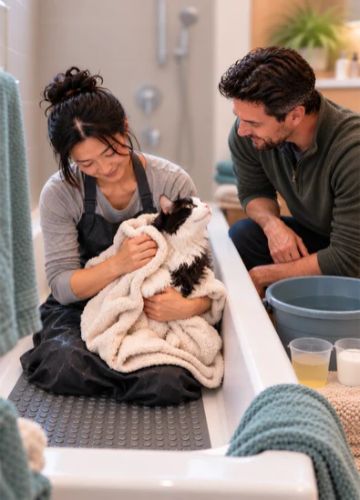
to absorb moisture gently and help
your cat remain comfortable.
Towel drying
- Wrap the cat in a warm towel straight out of the tub and press; don’t rub. Rubbing tangles fur and irritates skin.
- Swap to a fresh dry towel as each one gets damp. This is why you need several.
- Dry in sections. As the fur begins to dry, comb gently with a wide-tooth comb, holding the skin near the comb so it doesn’t pull.
- Let your cat take breaks. If your cat wants to walk away, follow with a towel rather than restrain them.
Warming towels safely
A warm (not hot) towel is one of the kindest things you can offer a wet cat.
- Best option: the clothes dryer. Tumble towels on a normal setting for about 5–10 minutes and time it to finish as the bath ends.
- No dryer? Warm the towels ahead of time by keeping them in a comfortably warm room until the bath is ready. Do not warm towels in an oven, microwave, or on a stovetop, and keep them away from heating elements.
- Always test. Hold the towel against the inside of your wrist for several seconds. It should feel cozy-warm, like a towel fresh from the dryer, with no hot spots. If it’s uncomfortable for you, it’s too hot for your cat.
Why we skip the blow dryer
We don’t recommend blow dryers for home cat baths. A cat’s hearing magnifies the noise, and concentrated heat can burn thin feline skin in seconds, especially on a wriggling cat. Professional groomers sometimes use specialized low-heat, low-noise dryers on cats who are used to them, but that’s different from a frightened cat at home.
Staying warm while the coat dries
- Keep your cat in a warm, draft-free room until the coat is dry to the touch, right down to the skin. Thick coats can take hours.
- Offer a carrier or covered bed lined with a warm, dry towel. Many cats want to hide after a bath; let them.
- If you use a pet heating pad, keep it on low, under a towel, and cover only part of the bed so the cat can move off it.
- No outdoor access until fully dry.
What could go wrong, and what to do
Imagine it before it happens, and you’ll respond calmly rather than reacting. We plan for these scenarios every time.
| If this happens | Do this |
|---|---|
| Open-mouth breathing or panting | Stop immediately. Move the cat to a quiet, well-ventilated area and contact your veterinarian promptly. If breathing is labored, the gums are pale or blue, or the cat collapses, seek emergency veterinary care immediately. |
| Collapse, drooling, pale or blue gums | Emergency. Wrap in a dry towel and go to the vet now. |
| The cat bolts, wet and soapy | Don’t chase or corner the cat. Close doors and let them settle. Once you can safely approach, rinse the shampoo from the coat with lukewarm water. If a full rinse isn’t possible without escalating the cat’s distress, use damp cloths to remove as much product as possible and contact your groomer or veterinarian for advice. |
| You’re bitten or deeply scratched | Release gently rather than yanking away. Wash the wound well. Cat bites often become infected, so see a doctor, especially for hand bites. |
| Water or shampoo gets in an eye | Flush gently with clean, lukewarm water. Call your vet if squinting or redness lasts. |
| Water gets in an ear | Don’t swab inside. Dry the outer ear with a towel. Call your vet if you see head shaking, tilting, scratching, or odor in the next few days. |
| The cat urinates, defecates, or vomits | It’s a fear response, not misbehavior. Pause, rinse it away, and decide calmly whether to continue. |
| Shivering | Distinguish cold from fear. A warm room, warm towels, and quiet should help both. Shivering that continues once the cat is warm and dry, or a cat that feels cold to the touch or seems sluggish, needs a vet call. |
| The cat slips or scrambles | Check that the mat is gripping. The Holder lowers the cat’s center of gravity and supports the chest. |
| You can’t finish the rinse | Stop the bath and towel off. Use damp cloths to remove as much residue as you can, and plan a groomer visit. |
| Water feels too hot or too cold mid-bath | Pause with the cat wrapped in a towel while you adjust. Never correct it from the tap with the cat in the tub. |
Aftercare: the next 48 hours
The bath ends when your cat is dry, calm, and back to normal, which may take a day. Give space, warmth, and quiet.
- Let them recover their way. Expect hiding, intense self-grooming, or a little sulking. That’s normal and part of re-scenting themselves.
- Reward and reconnect. Offer a favorite meal or treats and gentle attention on your cat’s terms.
- Keep the day quiet. If you can, avoid other handling, guests, or vet visits.
Call your vet if you notice:
- Shivering, coldness, or lethargy that doesn’t resolve once dry
- Head shaking, ear scratching, a head tilt, or ear odor
- Red, flaky, or itchy skin, or excessive licking of one area
- Squinting, watery or red eyes
- Not eating for more than 24 hours, or hiding that lasts more than a day or two
Gentler alternatives to a full bath
Before you fill the bucket, ask whether one of these would do the job. Often, one will.
| Problem | Try this first |
|---|---|
| Dull, oily, or dusty coat | Regular brushing and combing |
| A dirty patch or sticky spot | Spot-clean with a damp washcloth and a little diluted cat shampoo, then wipe away residue with a cloth dampened with plain water |
| Light odor or dander | Unscented, cat-labeled grooming wipes |
| Needs a refresh, hates water | A waterless foam shampoo labeled for cats |
| Soiled rear on a long-haired cat | A sanitary trim from a professional groomer |
| Fleas | A vet-recommended flea treatment, plus treating the home |
| Skin infection or allergy | Ask your vet; some prescribe leave-on mousses or sprays instead of baths |
Final Thoughts
A good cat bath isn’t measured by how clean the coat is. It’s measured by whether your cat is healthy, warm, and still willing to curl up next to you that evening.
Bathe only when it’s truly needed. Prepare the room, the products, and the plan before the cat ever sees water. Keep the water quiet, lukewarm, and away from the face and ears. Work as a calm team, dry gently and warmly, and know your stop point before you start. And if your gut says this cat, on this day, isn’t a candidate, trust it. Calling a professional is a caring choice, not a failure.
Quick-reference summary
- Confirm a bath is necessary, or choose an alternative.
- Complete the bathroom safety audit.
- Brush, trim claws, and practice dry runs ahead of time.
- Prepare cat-safe products, lukewarm water, and warm towels.
- Follow the two-person protocol, keeping the face and ears dry at all times.
- Rinse completely, dry gently, and keep your cat warm until fully dry.
- Watch closely for 48 hours, and call your vet with any concerns.
Sources
- Texas A&M College of Veterinary Medicine, Pet Talk: When You Should—And Shouldn’t—Give Your Cat A Bath
- Inverse, interview with Dr. Bruce Kornreich, Cornell Feline Health Center: Should I Give My Cat A Bath?
- Heffner & Heffner, Hearing Research (1985): Hearing range of the domestic cat
- American Association of Feline Practitioners: Permethrin Poisoning and Cats
- ASPCA: Feline Toxins to Steer Clear Of
- PangoVet (vet-reviewed): How Do I Know If My Cat Is Cold?
- Earthbath: 2-in-1 Conditioning Cat Shampoo
If you think your cat has been exposed to something toxic, call your vet, the ASPCA Animal Poison Control Center at (888) 426-4435, or Pet Poison Helpline at (855) 764-7661. Both may charge a consultation fee.

Earthbath, Hypoallergenic Shampoo & Conditioner
Luxurious shampoo for silky results. Non-toxic, pH-balanced, non-toxic, paraben, sulfate & dye free.
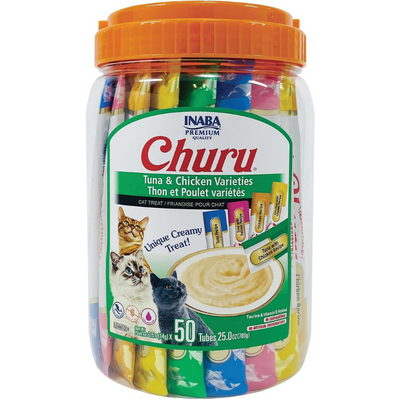
Churu Cat Treats
Lickable, Creamy Purée
Designed to be fed by hand, as an interactive way to spend time with your cat. A variety of flavors.
Learn More
Cat Basics: A cat’s behavior makes more sense when you understand its natural biology.
Fur: Regular grooming helps maintain healthy fur and allows early detection of skin or coat problems.
Receive thoughtful updates, helpful tips, and sneak peeks at the upcoming Catacats guidebook.
Disclosure & Disclaimer: As an Amazon Associate, I may earn commission from qualifying purchases at no extra cost to you. All recommendations are based on research and experience to help you provide the best care for your cats. The information provided is for educational purposes only and is not a substitute for professional veterinary advice. Always consult your veterinarian regarding your cat’s health, diet, and care.