
Caring for Cat Ears: Anatomy, Hearing,
Safety, and Best Practices

A cat’s ears are highly specialized sensory organs that support hearing, communication, spatial awareness, and balance. They’re finely tuned for survival and reading the world around them, and that sensitivity means they need thoughtful, minimal care rather than routine fussing. At Catacats, we approach ear care in a protective, informed way, not an invasive or cosmetic one.
Understanding Cat Ear Anatomy
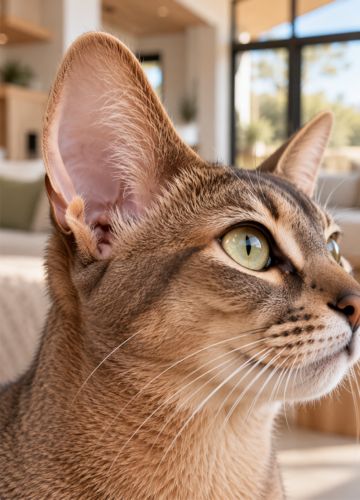
A cat’s ear has three main sections. The outer ear, or pinna, is the visible flap you can see move and swivel. The middle ear contains tiny bones that transmit sound. The inner ear handles both hearing and balance.
The pinna funnels sound down into the ear canal, which in cats is longer, narrower, and more curved than a human’s. That shape helps make feline hearing so sharp, but it also means moisture and debris can get trapped deep inside if the ear is handled roughly or over-cleaned.
Henry’s Pocket
You may notice a small skin fold along the outer edge of your cat’s ear, roughly where the pinna curves. This is called Henry’s pocket, or the cutaneous marginal pouch. It’s normal anatomy seen in many cats and dogs, and vets still don’t have a confirmed answer about what it does. One theory is that it helps detect higher-pitched sounds, but it may serve no clear function.
What matters in practice: it isn’t a sign of mites, infection, or poor hygiene, and you shouldn’t clean, poke, or manipulate it. Leave it alone.
A Cat’s Hearing: Exceptionally Sensitive by Design
Cats have one of the broadest hearing ranges of any mammal. Classic behavioral audiogram research places feline hearing at roughly 48 Hz to 85,000 Hz, compared to about 20 Hz to 20,000 Hz for humans. That upper range reaches well into ultrasonic territory that’s completely silent to us, which is exactly the frequency range many small rodents use to communicate.
Cats are also remarkably good at locating where a sound is coming from. Research on sound localization shows that cats can pinpoint a sound’s source to within a few inches from several feet away, a skill that comes from a highly specialized system for detecting and locating sound. Each pinna has roughly 32 individual muscles, compared with about 6 in humans, letting a cat rotate each ear up to 180 degrees independently. One ear can track a sound behind them while the other stays tuned to what’s ahead.
This means cats experience the acoustic world very differently, and often far more intensely, than we do.
Why Loud Noise Deserves Real Consideration
Yelling, blasting music, loud television, and sudden sharp sounds aren’t just background irritation to a cat. The 2013 AAFP/ISFM Feline Environmental Needs Guidelines identify sensory input, sound included, as one of the core pillars of a healthy feline environment, and note that unmet environmental needs are a common, often invisible, driver of stress-related behavior in cats.
For a cat, that can look like chronic stress, new hiding or avoidance behavior, or a growing aversion to certain rooms or sounds. Because feline hearing is so sensitive, a volume that’s merely loud to you can feel much more intense to your cat from the other end of the room. A quiet, predictable home environment isn’t pampering. It’s a real piece of feline emotional well-being.
Healthy Cat Ears: What’s Normal
A healthy cat’s ear interior should look pale pink to light peach, with little to no visible wax, no real odor, and no redness, swelling, or discharge. That’s the baseline to know so you can notice when something changes.
Per the Merck Veterinary Manual, healthy cats generally don’t need routine ear cleaning unless a vet specifically recommends it or there’s visible debris. This isn’t a minor detail: unnecessary cleaning is a recognized predisposing factor for ear inflammation in cats because it can disrupt the canal’s natural self-cleaning mechanism and irritate healthy tissue.
Good Home Ear Care
Weekly observation. Look inside the ear without inserting anything. Take a quick sniff for any unusual or strong odor. Watch for excessive scratching or head shaking between checks.
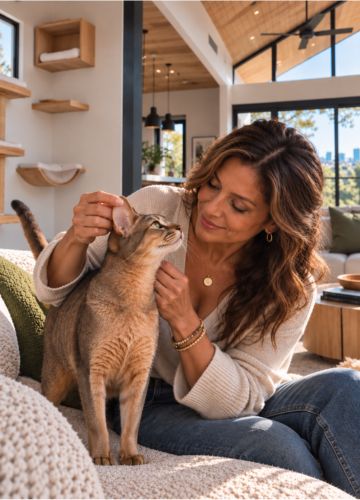
Gentle cleaning, only if needed. If your veterinarian recommends cleaning, use a veterinarian-recommended ear cleaner formulated for cats and follow the product’s instructions. For simple home wiping, use cotton or gauze only on the visible portions of the ear. Never insert anything into the ear canal.
Less really is more here. A cat with normal, healthy ears doesn’t benefit from a cleaning routine; it can do more harm than good.
What Not to Do
A few rules are worth treating as non-negotiable:
- Never insert cotton swabs, tissues, or any tool into the ear canal
- Never use hydrogen peroxide, alcohol, vinegar, essential oils, or other household remedies in a cat’s ears. These substances can irritate delicate ear tissue and may worsen inflammation
- Never use dog ear products unless they’re explicitly labeled safe for cats. Feline ear tissue and metabolism don’t process ingredients the same way a dog’s do
- Never flush a cat’s ears on your own unless your veterinarian has specifically instructed you to do so and shown you how
- Never treat ear symptoms without knowing the actual cause, since the wrong product on the wrong problem can make things worse
Keeping Ears Dry During Baths
Water in a cat’s ears isn’t something to shrug off. The same curved canal that makes feline hearing so good also drains poorly, and moisture can contribute to conditions that promote ear inflammation, especially when it remains trapped in the ear canal.
If a bath is necessary, keep water out of the ears and gently dry the outer ear afterward with a soft towel. Avoid directing water or air into the ear canal.
Why Cat-Specific Products Matter
Cats are not small dogs. Their ear tissue is more delicate, and they process topical chemicals differently. Anything used in or near a cat’s ear should clearly state it’s safe for cats, ideally carry a veterinarian’s recommendation, and skip added fragrances, dyes, and harsh preservatives. Some “natural” or herbal products marketed for pet ear care are genuinely unsafe for cats, even though they’re fine for humans or dogs, so “natural” on a label isn’t a safety guarantee.
Common Cat Ear Problems
Ear mites (Otodectes cynotis). Ear mites are an important and common cause of feline ear inflammation today, particularly in kittens and cats living in multi-cat environments. Published studies have found them responsible for a substantial proportion of feline otitis cases, although prevalence varies considerably among cat populations. Classic signs are dark, coffee-ground-like debris, intense itching, and head shaking. Diagnosis and treatment need a vet, since mite infestations don’t resolve with cleaning alone.
Ear infections (otitis). Otitis is genuinely less common in cats than in dogs, generally affecting about 2 to 10 percent of feline patients seen in general practice. When it does happen, it’s often secondary to something else, most commonly mites, allergies, or foreign material lodged in the canal. Watch for odor, redness, discharge, or obvious pain when you touch the ear.
Polyps or growths. Inflammatory ear polyps are more commonly seen in young cats and can cause chronic ear problems, head shaking, discharge, head tilt, or balance abnormalities. Older cats are more likely to develop ear-canal tumors. Any persistent or unusual growth, discharge, or one-sided ear problem warrants veterinary evaluation.
When to See a Veterinarian
Book a visit for persistent scratching or head shaking, redness, swelling, or discharge, a foul odor, obvious pain or sensitivity, or any head tilt or loss of balance. Never treat ear issues blindly at home. The wrong treatment, or the right treatment for the wrong cause, can make a problem worse or cause lasting damage.
Frequently Asked Questions
What is the black stuff in my cat’s ear?
Dark, coffee-ground-like debris is a classic sign of ear mites, an important and common cause of feline ear inflammation today. Regular brown or black earwax in smaller amounts can be normal, but a real buildup, odor, or scratching means it’s time for a vet visit, not home cleaning.
Why does my cat’s ear smell bad?
A strong odor usually points to an infection, often secondary to mites, allergies, or trapped debris. Don’t treat it with home remedies. A vet needs to identify the actual cause before treatment will work.
Does my cat need regular ear cleaning?
Generally, no. Healthy cats don’t need routine ear cleaning unless a vet recommends it or there’s visible debris. Unnecessary cleaning can irritate the canal, so less is more.
Is it safe to use dog ear cleaner on my cat?
Not unless it’s explicitly labeled safe for cats. Cat ear tissue is more delicate, and their metabolism processes topical chemicals differently than a dog’s does.
Why shouldn’t I use a cotton swab to clean my cat’s ears?
A swab can push debris deeper into the curved ear canal instead of removing it and can injure the canal or eardrum. Stick to wiping only the visible area with a cotton pad or gauze.
How well can cats actually hear compared to humans?
Cats hear roughly 48 Hz to 85,000 Hz, well beyond the human range of about 20 Hz to 20,000 Hz, reaching into ultrasonic frequencies many small rodents use to communicate.
The Catacats Philosophy on Ear Care
Ear care, done right, comes down to a few simple commitments: respecting how sensitive a cat’s ears are, avoiding unnecessary intervention, and getting veterinary guidance early rather than guessing.
Healthy ears support more than hearing. They support balance, comfort, and a cat’s confidence and sense of security in its environment. Protecting them well means giving them exactly the light, informed touch they’re built for, and nothing more.

Unscented Ear Wipes
Lick Safe
Cat/dog ear cleaner finger wipes are meticulously formulated by veterinarians for excellent care.

Vet-Developed Cat/Dog
Ear Wipes
Hypoallergenic wipes safely remove dirt and wax.
Gentle ingredients for delicate skin around ears.
Learn More
Cat Basics: Cats still follow the instincts of small predators. Discover how this shapes their behavior.
Vet Visits: Routine checkups allow veterinarians to monitor your cat’s health over time.
Receive thoughtful updates, helpful tips, and sneak peeks at the upcoming Catacats guidebook.
Disclosure & Disclaimer: As an Amazon Associate, I may earn commission from qualifying purchases at no extra cost to you. All recommendations are based on research and experience to help you provide the best care for your cats. The information provided is for educational purposes only and is not a substitute for professional veterinary advice. Always consult your veterinarian regarding your cat’s health, diet, and care.