
Cat Beds
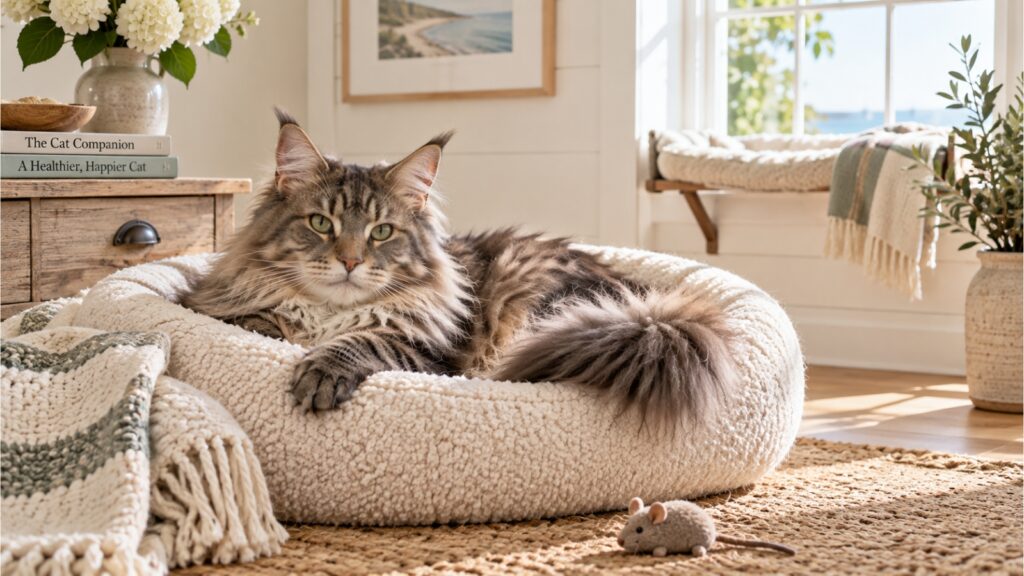
A good bed isn’t a luxury. A comfortable, safe place to rest is part of a healthy environment for your cat.
Cats sleep an average of 12 to 16 hours a day, and some sleep even longer. That sleep doesn’t come in one long stretch the way ours does. Cats are polyphasic sleepers, meaning they nap throughout the day and night, with periods of both light and deeper sleep. Given how much of a cat’s life happens horizontally, where they sleep and what they sleep on aren’t small details. These factors can influence their comfort, security, and ability to rest undisturbed.
One piece of feline physiology explains a lot about bed-related behavior: cats have a relatively wide thermoneutral zone, the temperature range within which their bodies can maintain their temperature without expending significant energy on heating or cooling. For cats, this range is generally cited at about 86 to 100.4°F (30 to 38°C) (ISFM/AAFP). That helps explain why a cat may abandon an expensive bed for a sunny patch of floor or seek out a particularly warm sleeping place. They aren’t being dramatic. They’re responding to their own biology.
Placement Choice
Good bed placement means offering variety rather than settling on one perfect spot.
A cat may want to stretch out in a warm, sunny window in the morning and retreat to a cool, shaded corner by afternoon. After something stressful, such as a vet visit, unfamiliar guests, or a loud storm, a dark, enclosed hiding spot may feel safest.
This isn’t simply guesswork. Research on shelter cats has found that providing a hiding box can reduce stress and help cats adapt more quickly to a new environment. In one study, cats with a hiding box had lower stress scores within the first three to four days and recovered from the stress of a new environment at least four days earlier than cats without one (Vinke et al., 2014). A later randomized study similarly found that cats with hiding boxes showed a faster decrease in stress scores (van der Leij et al., 2019).
A wool cat cave gives a cat exactly that kind of private retreat, and it isn’t just an anxious-cat item. A private place to retreat can give any cat a chance to decompress, especially after a stressful event.
Height matters, too. The AAFP and ISFM Feline Environmental Needs Guidelines emphasize the importance of safe places and access to appropriate environmental resources. Elevated resting areas can give cats a secure vantage point to observe their surroundings, while lower, easily accessible resting places are especially important for kittens and older cats with limited mobility (Ellis et al., 2013).
A high shelf and a low, quiet corner give a cat options, which is exactly the kind of choice-rich environment feline environmental guidelines encourage.
Bed Shapes: Why One Bed Rarely Fits All
Watch your cat sleep for a few days, and you’ll likely see a pattern. Some cats curl into a tight circle, tucking their nose under a paw. Others sprawl flat on their side, legs fully extended. Many do both, depending on the day, the temperature, or their mood.
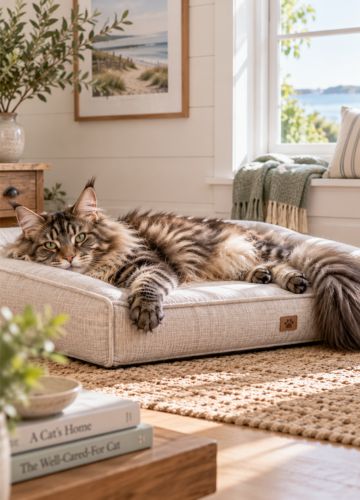
way to sleep.
That’s why offering more than one bed shape can be useful:
- Round or donut-shaped beds with raised rims suit cats who curl tightly and like something to press against while they sleep.
- Flat mats or rectangular loungers give cats room to stretch out fully, which curled beds don’t allow.
- Caves and covered pods work for cats seeking privacy, warmth, or a break from a busy household. A covered retreat can be especially useful when a cat is stressed.
- Elevated beds and window perches satisfy a cat’s preference for height and visual access to its surroundings.
Rather than guessing which one your cat prefers, offer at least two different shapes in different locations and watch which one gets used. Many cats benefit from having access to more than one bed style, and that’s normal.
A cat’s preference can also shift with age. Older cats with joint stiffness or reduced mobility may trade a high perch for a low, easy-access bed, so re-evaluate shape and placement as your cat gets older.
Safety and Comfort
Choose beds made from non-toxic, pet-safe materials with a stable, non-slip base. Avoid sharp edges and skip cat-tree beds with narrow footprints that may tip easily, especially for large or heavy cats, who need a noticeably sturdier structure than average-sized cats.
For very large cats, a well-built dog bed can be a smart substitute, such as the Bessie & Barnie Cuddle Pod.
Enclosed or high-sided beds tend to feel reassuring, while soft, open designs suit more relaxed, confident moments. Every cat is an individual, and texture preferences vary just as much as shape preferences.
Some gravitate toward a plush faux-fur bed, while others prefer soft fleece, smooth cotton, firm woven fabric, or felted wool. Watching which texture your cat returns to again and again is the most reliable way to find what actually works—more reliable than any general recommendation, including this one.
Choosing Natural Materials
Natural fibers have practical properties that can make them worth considering for cat bedding.
Wool is a particularly useful material because its fibers can absorb and release moisture while retaining insulating properties. Wool can help buffer changes in temperature and humidity, making felted wool caves and mats comfortable across a range of conditions.
Cotton is another practical natural option. It is breathable, comfortable against the skin, and generally easy to wash, which matters because cat bedding needs regular cleaning.
Synthetic fleece and polyester-filled beds are also widely available. They aren’t inherently unsafe, and a synthetic bed may be an excellent choice if your cat prefers its texture, warmth, or shape. Material quality, construction, washability, and your individual cat’s preferences matter more than whether a bed is labeled “natural.”
If you choose a natural-fiber bed, look for one that is well-constructed, washable or cleanable according to the manufacturer’s instructions, and free of loose fibers or components that could pose a hazard.
Cleanliness and Warmth
A clean bed matters as much as a soft one.
Wash bedding based on how heavily it is used and how quickly it becomes soiled. For a heavily used bed, washing every one to two weeks is a reasonable starting point; lightly used bedding may need less frequent washing. If a bed becomes visibly soiled, develops an odor, or has been exposed to urine, feces, vomit, or other contaminants, clean it promptly.
Use a mild, unscented detergent and follow the manufacturer’s washing instructions. Cats have highly sensitive senses of smell, and strong fragrances that seem pleasant to people can be unpleasant or irritating to cats.
Drying a washed cat bed in direct sunlight can be a useful finishing step. Sunlight can help dry the fabric thoroughly, reduce some surface microorganisms, and leave bedding feeling fresher and less likely to retain a stale or residual odor. Research on sunlight’s antimicrobial effects shows that its effectiveness varies by microorganism, surface, UV exposure, exposure time, and environmental conditions. Direct outdoor sunlight provides substantially more UV exposure than sunlight passing through a window, so placing freshly washed bedding outdoors in direct sun can provide greater exposure than simply leaving it inside near a sunny window.
Sunlight is not a replacement for washing, but it can complement regular laundering by helping bedding dry thoroughly and providing additional environmental exposure after cleaning.
Sunlight may also help reduce dust mites under some conditions. However, washing remains important because allergen proteins can remain even when mite numbers are reduced. If someone in the household is sensitive to dust-mite allergens, regular laundering is more reliable than relying on sunlight alone.
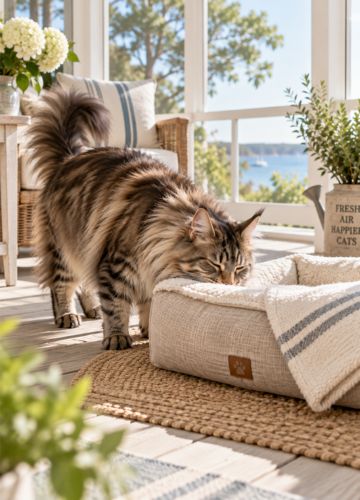
Another consideration with cat bedding is familiar scent.
Cats rely heavily on their sense of smell when evaluating their environment. If your cat strongly prefers a particular bed, avoid washing all the bedding in the home at once when you can. Keeping one familiar-smelling resting place available can help preserve continuity in the cat’s environment.
Match the fabric to the season where you can. Warmer, thicker materials may be appreciated during colder weather, while breathable, lighter materials may be more comfortable in warm conditions. Most importantly, let your cat move between different sleeping locations so they can choose what feels most comfortable.
In Conclusion
A good bed setup isn’t about finding the one perfect product. It’s about offering choices: a warm spot and a cool one, an open surface and an enclosed retreat, a curl-friendly shape and a stretch-friendly one, while letting your cat’s own behavior tell you what’s working.
Choose stable, safe bedding that you can clean regularly, consider materials and textures your cat actually prefers, and provide resting places that accommodate changes in temperature, activity, age, and mobility.
Because cats spend so much time sleeping, providing comfortable, safe, choice-rich resting places is a simple way to support their well-being.
Sources
- Sleep Foundation, “How Many Hours Do Cats Sleep?”
- 2022 ISFM/AAFP, “Cat Friendly Veterinary Environment Guidelines,” Journal of Feline Medicine and Surgery
- Vinke, C.M., Godijn, L.M., van der Leij, W.J.R. (2014), “Will a hiding box provide stress reduction for shelter cats?” Applied Animal Behaviour Science
- van der Leij, W.J.R. et al. (2019), “The effect of a hiding box on stress levels and body weight in Dutch shelter cats,” PLOS ONE
- Ellis, S.L.H. et al. (2013), “AAFP and ISFM Feline Environmental Needs Guidelines,” Journal of Feline Medicine and Surgery
- String, G.M. et al. (2023), “Disinfection of Phi6, MS2, and Escherichia coli by Natural Sunlight on Healthcare Critical Surfaces,” American Journal of Tropical Medicine and Hygiene

Plush Donut Bed
For Calming Rest
Faux fur bed comes in a range of neutral hues and a variety of sizes. Machine-washable. 20″L x 20″W x 6″Th

Handmade Merino Wool
Cat Cave
Durable, yet super soft, lightweight, and portable. Perfect gift for beloved cats and cat lovers. 16″D x 16″W x 10″H
Learn More
Cat Basics: Discover how feline instincts shape everyday cat behavior.
Toys: Learn how play and enrichment support instinct satisfaction, confidence, and emotional balance.
Receive thoughtful updates, helpful tips, and sneak peeks at the upcoming Catacats guidebook.
Disclosure & Disclaimer: As an Amazon Associate, I may earn commission from qualifying purchases at no extra cost to you. All recommendations are based on research and experience to help you provide the best care for your cats. The information provided is for educational purposes only and is not a substitute for professional veterinary advice. Always consult your veterinarian regarding your cat’s health, diet, and care.