
Cats: Ancient Predators in a Human World
Understanding the Animal You Live With—and Why It Changes Care, Health, and Home
Cats now live in roughly 49 million U.S. households, more than at any point in recorded history, and most of us still don’t really know what we’re looking at. We share our couches with them, watch them walk across our keyboards when we’re trying to work, and let them curl against our chests at night until their breathing settles into ours. Somehow, the animal we know best in our own homes is also the one we understand least.
That’s not because we don’t love them, or don’t try. It’s because nobody handed us the context.
A cat is not, biologically speaking, a modern animal. It’s an ancient predator, small and precisely built for hunting, doing its best to make sense of apartments, kibble bags, and a human’s idea of a schedule. If you want to actually understand a cat rather than just tolerate its habits, you have to go back to where it came from and notice what hasn’t changed since.
That’s the starting point for everything CATACATS does.

Cats Didn’t Become Ours. They Stayed Themselves.
The domestic cat (Felis catus) descends from the African wildcat, Felis silvestris lybica. For a long time, archaeologists put domestication at around 5,000 years ago. Still, DNA analysis of cat remains from dig sites has since pushed that date back to roughly 10,000 years ago, near the end of the Neolithic period. The story is fairly plain once you lay it out: early farming communities started storing surplus grain, the grain drew mice, the mice drew wildcats, and people noticed the cats were doing them a favor and let them stick around.
They didn’t stay put, either. Cat bones dated to roughly 9,000 to 9,500 years ago have turned up on Cyprus, an island that has never had a native wildcat population, so someone had to have carried them there by boat on purpose.
Here’s the part that matters more than the timeline. Unlike dogs, cats were never deliberately bred by humans for obedience or temperament. Organized cat breeding, in the sense of clubs, standards, and pedigrees, is barely 150 years old. For nearly all of their history near us, cats bred themselves, in the ordinary evolutionary sense: the calmer, more human-tolerant cats got more food and safety, so their genes stuck around, and nobody was choosing traits on purpose the way breeders did with dogs for millennia.
Anthrozoologist John Bradshaw spends much of Cat Sense on this exact point. Coat patterns have diversified. Cats today tolerate close contact with people and even with other cats far more than their wild ancestors would have. But underneath that, the sensory priorities, the hunting reflexes, the way stress moves through a cat’s body, all of it is still remarkably close to the wildcat that first wandered into somebody’s granary.
Which is really the whole premise of good cat care: you’re not caring for a small furry person. You’re caring for a hunter who happens to live indoors.
The “Raw Cat” and What It Explains
Jackson Galaxy, in Total Cat Mojo, gives this underlying animal a name that’s stuck with many cat owners: the Raw Cat. His delivery is a lot more casual than Bradshaw’s, but he’s describing the same science.
The Raw Cat is the reason a cat needs to feel like it controls its own territory and resources, not just to live in a house someone else decorated. It explains why cats notice a change in laundry detergent scent faster than most humans notice a change of season, and why they’d rather eat five small meals than two big ones, having evolved with a naturally low thirst drive. It’s why a cat can sleep sixteen hours a day and still snap awake at the faintest sound, because that sleep was never meant to be as deep as it looks. And it’s why a sick cat so often looks completely fine right up until it very much isn’t.
None of that is a personality quirk. It’s a survival kit that outlived the environment it was built for.
A Predator’s Senses in a Living Room
It’s easy to underestimate how much a cat is actually taking in while it lies on a windowsill looking half-asleep.
Its whiskers are rooted deep enough in the skin to connect straight to a dense bundle of nerves, and they span almost exactly the width of its body, which is precisely why a cat pauses at a gap before committing to it. They’re doing math. Those same whiskers pick up air currents subtle enough to register a mouse moving several feet away in the dark, well before there’s anything to see.
Then there’s the hearing. Cats can pick up frequencies well into the ultrasonic range, higher than humans hear and higher than most dogs, too, and that range happens to line up almost exactly with the frequencies small rodents use to talk to each other. None of this is ornamental. It’s hunting equipment, still fully wired and running, in a house where the only thing left to stalk is a feather on a stick.

Desert Sand to Sofa
Cats evolved in dry environments as solitary hunters who got most of their water from their prey, conserved energy carefully, and defended a patch of territory because their lives depended on it.
Now, many of those same animals spend their days indoors, eating processed food, drinking from a bowl, and sleeping through most of the daylight hours.
That gap between the animal and the environment is where most of the questions cat owners actually ask come from. Why won’t my cat drink more water? Why does it do better on wet food than dry? Why does it sleep so much? And why, of all things, can stress alone seem to trigger urinary or digestive problems that have nothing obviously to do with emotion?

That last one deserves more than a passing mention. Dr. Tony Buffington, a veterinary researcher formerly at Ohio State University, spent decades studying what he came to call Pandora syndrome: a group of medical problems, feline interstitial cystitis among them, along with GI upset, overgrooming, and appetite swings, that trace back not to infection but to chronic stress in the cat’s own environment. In his clinical work, cats with these symptoms improved dramatically, in the range of 75 to 80 percent, once their surroundings changed. Consistent feeding times. A litter box that stayed in the same spot. More places to climb. No medication involved. It’s among the clearest evidence out there that, for a cat, “stressed” and “sick” aren’t really two separate things.
Not Dogs. Not Children. Not Roommates. Not Décor.
Cats get misjudged constantly because people keep measuring them against animals, or kinds of relationships, they were never trying to resemble.
A cat isn’t a dog, bred over thousands of generations to take instruction and want to please. It isn’t a child looking to you for approval. And despite coming from a solitary ancestor, it isn’t quite the indifferent roommate people joke about, either. Domestic cats show more social flexibility than you’d expect from a species that hunted alone for most of its evolutionary history. Feral colonies will form around a shared food source, which a truly solitary hunter would have no reason to do. That same flexibility shows up at home: a cat will form real attachments, just on its own schedule, built out of trust and predictability rather than obedience.
Miss that, and the relationship gets frustrating fast for both the cat and the person. Get it, and things tend to settle down, health included.
Why Understanding Cats Changes Care
This isn’t only a behavior question. It affects almost every aspect of how a cat is cared for.
Get the environment and routine right for what a cat actually is, and the diet starts to support hydration and kidney function instead of working against them. Sleep gets treated as something to protect rather than interrupt. Stress-linked illness shows up less often. Cats tend to live longer, and better, in homes built around who they are instead of who we assumed they’d be.
They’re also remarkably good at hiding pain, which is a survival trait, not stubbornness. Looking vulnerable in the wild made you a target. So the tells are small: eating a little less, drinking a little more, a slight shift in how a cat uses the litter box or approaches the people in the house. Those are usually the first real signs something’s wrong, arriving well ahead of anything obvious. Knowing what’s normal for your own cat is often the only early warning you get.
The Human Side of the Equation
None of this only benefits the cat.
People who understand what’s actually driving their cat’s behavior tend to second-guess themselves less. They feel more confident making everyday care decisions instead of guessing. The relationship gets calmer, more genuine, less like managing a mystery. Homes start to feel more intentional and a little less reactive.
Living with a cat stops being a string of problems to solve. It starts to feel like sharing space with an animal whose behavior finally makes sense once you know the backstory.
Ancient Animals, Modern Homes
Cats are living history. They’ve come through millions of years of evolutionary pressure only to end up navigating artificial light, an indoor schedule, and a diet their bodies weren’t originally built to process.
Design care around who cats actually are, instead of who we expect them to be, and what you get isn’t just a better-behaved animal. You get a calmer nervous system, fewer stress-linked illnesses, and a home that works better for the cat and the person in it.
Understanding a cat was never really about control. It’s about learning to live alongside something ancient, and letting that understanding quietly reshape the care, the connection, and the home itself.

This Is CATACATS
CATACATS exists to bring clarity to cat care through science, close observation, and real respect for the animal behind the behavior.
Diet, hydration, sleep, environment, long-term health: it all starts with understanding the actual cat living in your house, not the idea of one.
Quick Answers
Behaviorally, yes, more than most people assume. Domestic cats have been shaped by only around 10,000 years of loose natural selection, without the deliberate breeding for temperament that shaped dogs, so their instincts, senses, and stress responses closely mirror those of their wildcat ancestors.
Yes. Veterinary research on Pandora syndrome has linked chronic environmental stress to real physical illness in cats, including urinary and digestive problems, with symptoms often improving significantly through environmental changes alone.
It’s an inherited survival instinct. In the wild, showing weakness made a cat a target for predators or rivals, so cats mask illness until it’s advanced, which is why subtle behavior changes matter more in cats than obvious symptoms.
Sources consulted: John Bradshaw, Cat Sense: The Feline Enigma Revealed; Jackson Galaxy, Total Cat Mojo; Dr. Tony Buffington’s published research on Pandora syndrome and multimodal environmental modification (Ohio State University); American Pet Products Association 2025 National Pet Owners Survey.
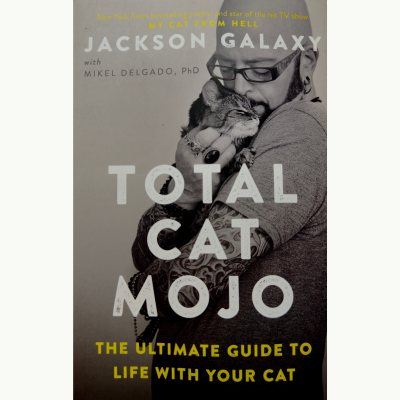
Total Cat Mojo
Comprehensive Guide
Love grows through education.
Fascinating humor-infused wisdom.
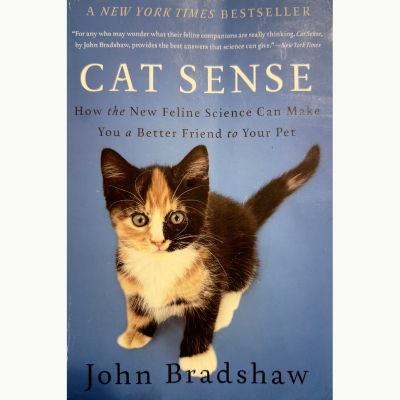
Cat Sense
Cutting Edge Science
NYtimes Bestseller. Cutting-edge research into the true nature of our feline friends.
Receive thoughtful updates, helpful tips, and sneak peeks at the upcoming Catacats guidebook.
Disclosure & Disclaimer: As an Amazon Associate, I may earn commission from qualifying purchases at no extra cost to you. All recommendations are based on research and experience to help you provide the best care for your cats. The information provided is for educational purposes only and is not a substitute for professional veterinary advice. Always consult your veterinarian regarding your cat’s health, diet, and care.